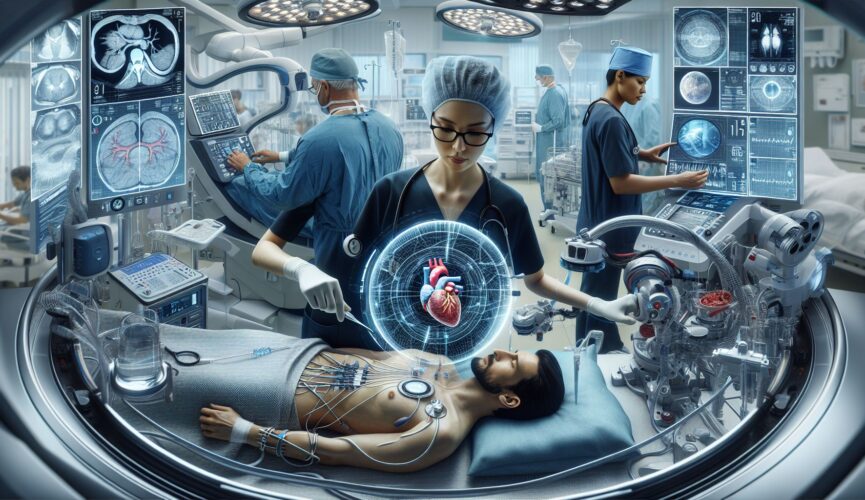
In the path to medical excellence, technology has always been a faithful companion, sparking new avenues of hope and resiliency. As we ascend towards future breakthroughs, it’s worth taking a moment to spotlight the lifesaving medical technologies that shoulder the burden of saving lives in our hospitals today.
Real-time Health Monitoring Systems
It’s not just about treating patients but continually observing them.
Healthcare providers no longer need to rely on periodic check-ups to keep abreast of their patients’ health status. Real-time health monitoring systems are transforming the way doctors interact with their patients, providing a constant flow of vital data such as heart rate, blood pressure, and glucose levels. This technology allows for proactive responses to any adverse changes in the patient’s condition, effectively eliminating the time window between problem detection and solution deployment.
These monitoring systems also provide a lifeline for high-risk patients who may be caring for their health independently, sending emergency notifications to the doctors if vital signs waver from the standard range.
Non-Invasive Diagnostic Tools
Invasive procedures are getting sidelined in favor of non-invasive diagnostic methods.
Medical imaging techniques such as Magnetic Resonance Imaging (MRI), Computed Tomography (CT) scans, and Positron Emission Tomography (PET) are playing a significant role in disease prevention, diagnosis, and treatment. These techniques promise a ‘visual’ journey into the human body, aiding doctors in pinpointing the disease locations, understanding their spread and devising effective treatment strategies.
Moreover, advanced ultrasounds now offer a 3D/4D view of the body’s interiors, and endoscopy procedures reduce the need for open surgeries to diagnose digestive tract issues.
Revolutionary Treatment Modalities
With new treatment modalities, doctors are not just treating conditions – they are transforming lives.
Certainly, some of the most phenomenal medical technologies lie in the field of treatment. Telemedicine, for example, facilitates access to healthcare to people in remote areas, making healthcare universally accessible.
Further, we have the advent of precision cancer therapies that target specific genetic anomalies to combat cancer. Deep-brain stimulation techniques treat Parkinson’s disease and depression. In addition, robotic-assisted surgeries enhance the precision and success rates of complex procedures while reducing recovery times.
Another exceptional development seen is Extracorporeal Membrane Oxygenation (ECMO). ECMO operates as a cardiopulmonary bypass system, providing respiratory and cardiac support for patients whose heart or lungs fail to function properly, giving them vital time to recover.
Conclusion
Working behind the scenes in our hospitals, these technologies are ensuring a definitive shift from reactionary to preventative healthcare, bolstering early detection, personalized treatment, and increased survival chances.
The future of medical technologies is promising immense potential. As advancements like gene-editing, AI-based diagnostic tools, 5G enabled telehealth services, and bioprinting make their way into the hospitals, we can expect an ever-increasing impact on saving and enhancing patient lives.
Indeed, the symphony between medical sciences and technology innovations is crafting a new era in healthcare, a beacon of hope and life for the patients.