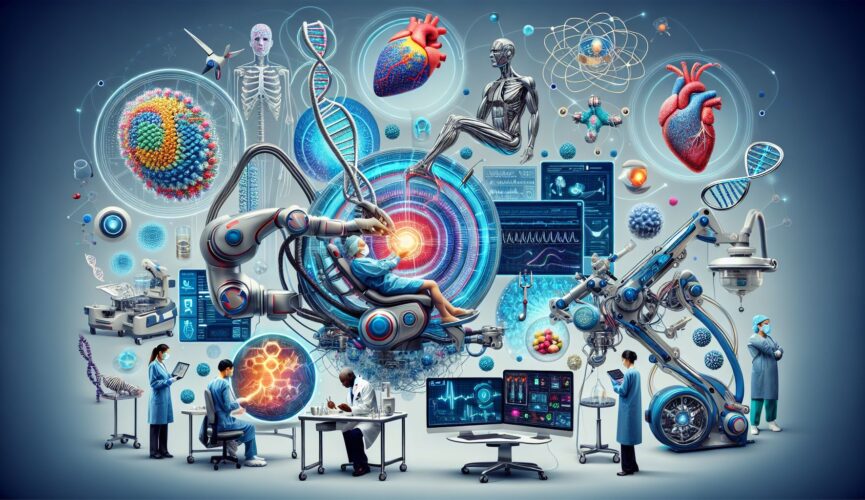
Advancing technology has always been at the forefront of innovative medicine, resulting in many impressive lifesaving treatments. As a student of medicine, staying updated on these new technologies is critical, not only stem from pure interest but to ensure continued effective patient care in wellness centers and other healthcare establishments.
Revolutionizing Rapid Diagnostic Tests
Rapid Diagnostic Tests (RDTs) have become a critical tool in modern medicine. These tests save lives by providing immediate and accurate diagnoses for a wealth of diseases including Malaria, HIV, and various forms of influenza. The rapid delivery of results allows for quicker initiation of appropriate treatment, hence minimizing mortality and morbidity rates.
Whether in wellness centers, local hospitals, or remote clinics, RDTs have revolutionized the pace and manner of treating patients. For instance, the development of newly redesigned lateral flow tests has made testing for infectious diseases easier, even in remote areas devoid of laboratory facilities.
Harnessing the Power of Artificial Intelligence
Artificial intelligence (AI) is becoming significantly intertwined with healthcare, largely affecting diagnostics, treatment plans, and patient care. AI algorithms can swiftly sift through an enormous amount of data to spot patterns that a human might miss. This ability to rapidly and accurately analyze medical data equips doctors with a robust tool for making precise diagnostic and treatment decisions.
AI is also making strides in predicting patient risk. It is being used to predict which patients face higher risks of acute conditions such as heart attack or stroke. AI predictive models such as these help doctors to provide targeted treatment and preventive measures, ultimately saving lives.
The Emergence of Telemedicine
Traditionally, seeing a doctor required physically visiting a wellness center or a hospital. However, with the advent of telemedicine, accessing healthcare professionals has become increasingly convenient and efficient. Patients can have virtual consultations with their doctors and receive medical advice without leaving their homes.
This increased accessibility is particularly beneficial for patients who live in remote areas or those with mobility issues. Telemedicine also helps doctors monitor their patients in real-time and act swiftly in case of an unwanted health event, therefore potentially saving lives.
Advances in Gene Therapy
In recent years, gene therapy has been lauded as one of the most promising medical developments. By correcting or replacing faulty genes, gene therapy offers potential treatments and even cures for genetic disorders that were once thought untreatable.
While the technology is still in its nascent stages, the successful implementation of gene therapy in treating patients with conditions like Spinal Muscular Atrophy and Leber’s Congenital Amaurosis establish a hopeful precedent. With ongoing research and development, gene therapy holds the potential to save countless lives and fundamentally change the medical landscape.
Robotics in Surgery
Robotic surgery, while seemingly a concept pulled from the pages of science fiction, is now a reality. Robots can now assist surgeons in performing precise, minimally invasive procedures, significantly reducing surgical errors and patient recovery time.
The da Vinci Surgical System is one such notable example, being widely used in treating patients needing complex surgeries. By magnifying the surgeon’s view and providing 3D high-definition vision, this system allows for highly accurate surgical interventions.
Conclusion
In the realm of medicine, technology continues to serve as an indispensable ally. Whether ensuring rapid diagnostics, facilitating remote patient care, or assisting in precise surgeries, technology has undoubtedly transformed the landscape of healthcare.
As medicine continues to evolve with its technological advances, medical students must stay abreast of these trends for the sake of their future patients. This, combined with empathetic patient care, will ensure they are capable of offering the best in wellness and treatment, regardless of the medical landscape they will face in their future careers.