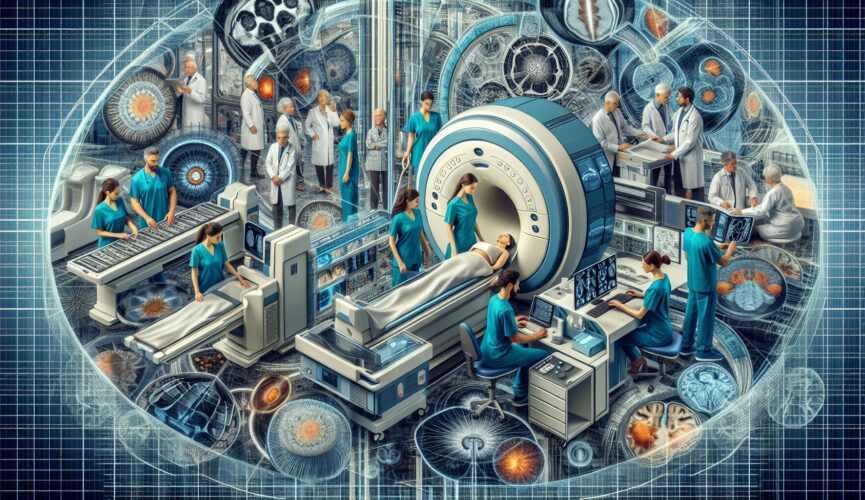
The field of medicine is a multifaceted entity, continually enveloped by the rapid advancements in science and technology. These strides have brought together a kaleidoscope of therapeutic measures aimed at maintaining health and curing diseases. One of the unsung heroes in this tapestry of therapeutics is Radiology. It is an essential cog in contemporary clinical medicine, now more than ever. In this post, we will delve into the burgeoning role of Radiology in medical treatments, focusing on how it aids in the diagnosis, treatment and follow-up of a multitude of health conditions.
Radiology – A Ray of Hope in Medical Diagnosis
Radiology began its journey with Wilhelm Conrad Roentgen’s discovery of X-rays in 1895. Since then, it has been home to numerous technological advances. The discipline has a central role in modern diagnostic medicine, with radiological imaging being indispensable for the evaluation and monitoring of several pathologies.
With the inception of Computed Tomography (CT), Magnetic Resonance Imaging (MRI), Positron Emission Tomography (PET), and Ultrasound imaging, radiology has made non-invasive, real-time visualizations of the human body’s internal structures a reality. For instance, CT scans can reveal minute details of bone and vasculature, while MRI excellently images soft tissue and neurological structures.
These imaging modalities provide an intimate look at the body’s insides without resorting to invasive measures, such as explorative surgeries. In essence, they help clinicians arrive at an accurate diagnosis efficiently and confidently, forming the cornerstone of medical treatment.
Radiology as Treatment – Interventional Radiology
Radiology is not only a diagnostic tool but also a form of treatment, thanks to an innovative sub-discipline known as Interventional Radiology (IR). IR entails the use of advanced radiological imaging techniques to guide minimally invasive surgical procedures. The premise of interventional radiology is image-guided, targeted therapy, championing precision medicine’s ethos.
IR has become increasingly mainstream in the management of various diseases, including cardiovascular diseases, cancer, and certain pain syndromes. For example, in oncology, radiologists can target tumors internally, using catheters to deliver high radiation doses to cancerous cells and significantly reduce their size – a process known as Brachytherapy, representing precision medicine’s potential.
In vascular intervention, conditions like aneurysms and artery blockages are treated using techniques such as stenting, angioplasty, and coil embolization that rely heavily on radiologic imagery for their accuracy. These methods are less invasive, safe, carry fewer risks of post-treatment complications, and require shorter recovery times – making them excellent alternatives to conventional surgery.
Interestingly, IR techniques have also found a niche in pain management. One such example is the application of nerve blocks or ablations under CT or fluoroscopic guidance to treat refractory chronic pain conditions. These procedures can provide significant relief and enhance patients’ quality of life, demonstrating Radiology’s broad-spectrum applications.
Prognosis and Post-Treatment Monitoring with Radiology
While Radiology’s uses in diagnosis and treatment are evident, its benefits extend beyond these stages. It is an invaluable tool for post-treatment monitoring and evaluating patients’ response to therapy.
For instance, post-chemotherapy patients undergo regular scans to monitor tumor shrinkage or look for disease recurrence. Similarly, patients who have undergone cardio-vascular stenting or other IR procedures are monitored with radiological imaging to check the stent’s position, possible restenosis, or aneurysm coils.
In summary, Radiology plays an integral role in the complete patient care cycle – from diagnosis to treatment and prognosis, making it an indispensable part of today’s healthcare delivery system.
Conclusion
Radiology has dramatically evolved since the discovery of X-rays, transforming into a vital link in the chain of patient care, no longer confined to the realm of diagnosis but actively revolutionizing treatment options. It impeccably blends technology and clinical medicine, improving patient care quality and reducing healthcare burdens.
Despite Radiology’s advancements, it is crucial that healthcare professionals and patients alike should appreciate it as a tool rather than a solution in itself. A well-utilized and understood tool can do wonders in any craft, and the field of medicine is no exception.
Understanding radiology’s potential is integral to exploiting its full capacity for the betterment of patient care. Therefore, educators in medicine and related healthcare fields must emphasize radiology’s growing importance, ensuring its effective integration into curriculums, enabling future healthcare professionals to harness Radiology’s potential fully.